
There is no shortage of exercise information.
You can find workouts on YouTube, download an app, save exercises from social media, or pull that old physical-therapy sheet out of a drawer. Most people do not struggle because they have never seen an exercise. They struggle because they are not sure which exercises fit them, how hard to work, or what to change when the original plan becomes too easy—or doesn’t feel right.
That distinction becomes increasingly important after 50.
A recent randomized study followed adults over 60 who were living with chronic health conditions. One group received a tailored, community-based exercise program. The other received exercises to perform at home. After 12 weeks, the coached group showed greater improvements in walking speed, balance, mobility, and quality of life.
This was a small study conducted outside the United States, so we should not make sweeping promises from it. But the practical lesson makes sense: having exercises and being coached through them are not the same thing.
A printed workout cannot watch how you move. It cannot notice that one side is working differently from the other. It cannot decide when you are ready for more resistance—or when a movement needs to be adjusted.
Good coaching provides those things.
It also provides progression. If you perform the same exercise with the same resistance for months, your body eventually has little reason to keep adapting. On the other hand, jumping ahead too quickly can leave you frustrated or needlessly sore. The useful middle ground is gradual, appropriate progress.
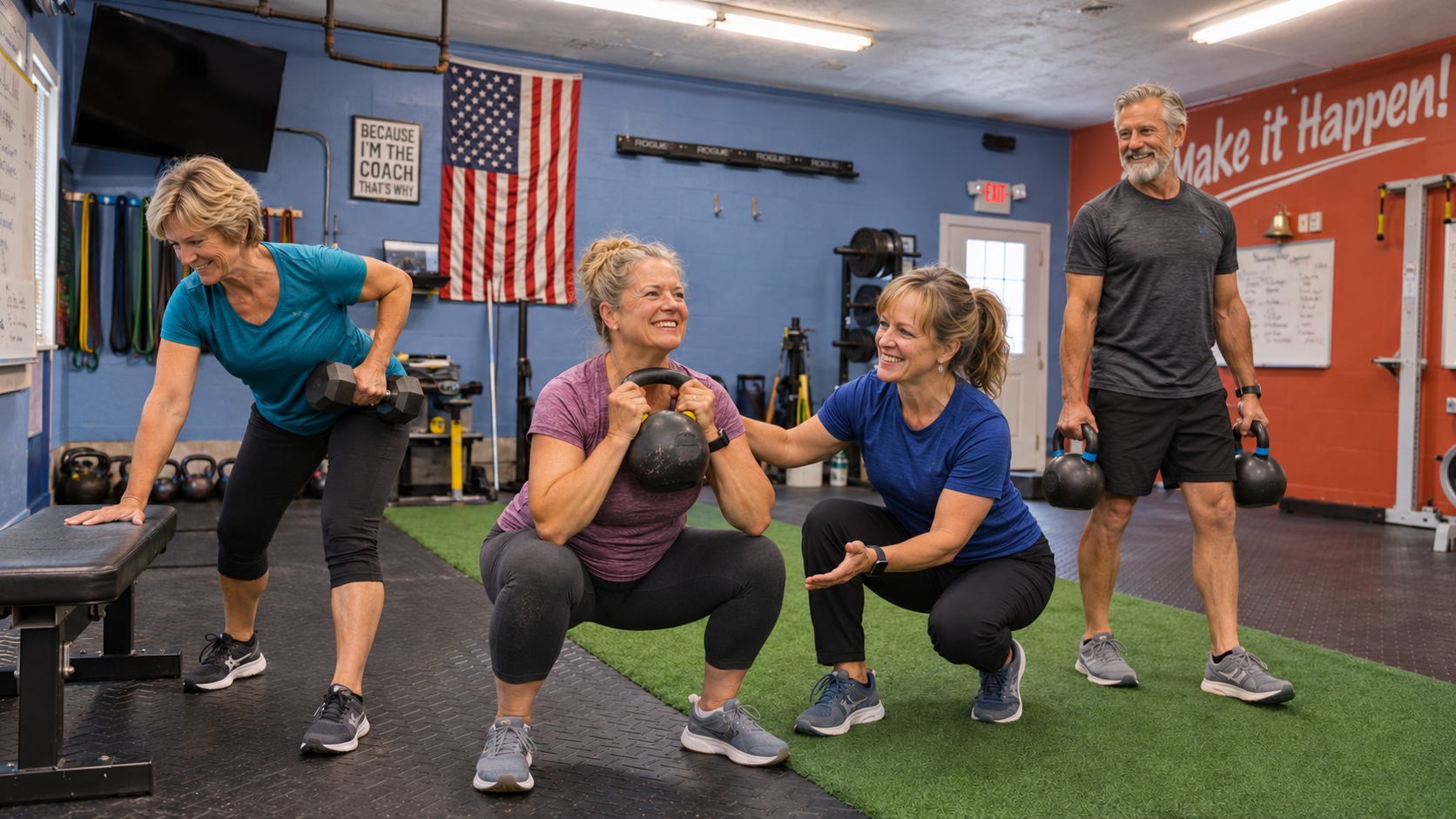
That might mean using a slightly heavier dumbbell. It might mean performing another repetition, improving your control, or using a greater range of motion. Progress does not need to look dramatic to be meaningful.
Coaching also supplies something a workout sheet never will: accountability.
Knowing that someone is expecting you makes it easier to show up on days when motivation is running low. Training alongside a small group reminds you that other people are working through many of the same challenges. You still train at your own level, but you are not doing it alone.
At CR8 Fitness, our goal is not to make exercise complicated or intimidating. It is to help people build practical strength through appropriate training, steady progression, and consistent coaching.
Because the best exercise plan is not necessarily the one with the most movements, the newest equipment, or the cleverest name.
It is the one that fits you—and that you can continue long enough to make a difference.
If you are tired of guessing what to do next, connect with us at CR8 Fitness in Epsom. We can help you find an appropriate place to begin.
Research source: November 10, 2026 randomized trial in the Journal of Aging and Physical Activity.